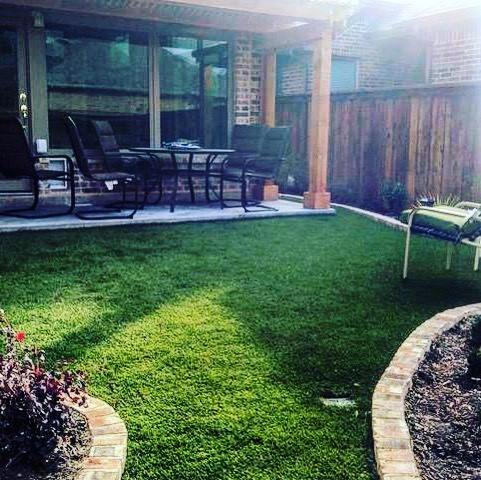
When installing synthetic turf in Fort Worth, we at GroundScape Solutions begin with thorough site assessment, grading, and creating a stable base to ensure proper drainage, especially given local clay soils and freeze-thaw cycles.
We then lay and secure the turf, adding infill materials like sand or rubber for weight and cushioning, while considering heat retention and safety.
Service Standards to Discuss
-
Assess soil stability, grading, and existing drainage before planning the base preparation.
-
Plan drainage routes around slopes, runoff patterns, and nearby structures.
-
Compare infill material options for intended use, maintenance needs, and heat retention.
-
Reality-check weed control: turf may resist weeds, but border edges still need attention.
What to Know About Synthetic Turf
Synthetic turf installation depends on the site, not just the turf product. A compacted aggregate base—a layer of crushed stone shaped to support the surface—can help provide a stable foundation, while grading and drainage provisions address where water can flow.
Soil type and slope affect those choices, so the right base depth and drainage plan vary by property.
Infill, the granular material brushed between turf fibers, can add ballast and help fibers stand upright; options differ in composition and feel.
Some synthetic turf surfaces retain more heat than natural grass, especially in direct sun. Ask how proposed materials and exposure may affect ease before choosing an artificial lawn.
Keyword Pool
Synthetic turf and artificial turf are commonly used for the same manufactured grass surface, while "fake grass" is a more casual term, and "artificial lawn" describes the finished scenery.
Turf installation refers to the process of creating that surface.
In Fort Worth, it typically involves preparing a stable base, planning drainage, and adding suitable infill.
Material and infill choices can also affect heat retention.
Assessment and Service Options
Synthetic turf installation begins with evaluating the site’s grade, existing soil, drainage, intended use, and exposure to sun. These factors guide removal of existing material, base preparation, and edging. A stable, well-drained base helps limit movement, while infill choice can support blade stability and cushioning.
GroundScape offers artificial turf installation, but specific base materials, infill, and preparation should be determined for the property rather than assumed.
In Fort Worth, intense sun can make turf retain heat, so shade, use patterns, and material selection matter.
Questions Before Booking
How do you prepare the base and manage drainage when installing synthetic turf?
The installer removes unsuitable material, prepares and compacts a stable base, then shapes it to support drainage.
Ask the office how the proposed base and drainage plan will suit your yard’s soil, slope, and expected use before booking.
Which infill should I choose, and how hot can the turf get?
Infill options can affect turf performance and feel, while synthetic turf may retain heat in direct sun.
Ask the office which infill is appropriate for your intended use and what to expect in your yard’s sun exposure.
Why Choose GroundScape Solutions
GroundScape Solutions, Inc. has served the Greater Fort Worth area for over 20 years. Owner Joe Armijo meets clients directly and supervises every project.
We offer custom scenery design, outdoor living spaces, drainage solutions, hardscaping, and sprinkler repair.
We provide free project estimates, a 1-year workmanship warranty, and speak Spanish.
We are rated 4.8 on Angi.

Request Your Free Quote
Request a free scenery design or installation estimate from GroundScape Solutions. Call 817-646-0072 or contact our team to discuss your outdoor project.
1-year workmanship warranty. Se habla español.
Service area: Fort Worth, Decatur, Weatherford, Rhome, and surrounding Tarrant, Parker, and Denton County communities.
Get Started
Fill out form below